




Azure – K2 63

Comet – H1 71
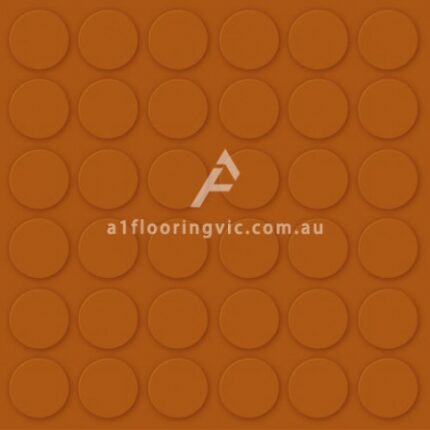
Comet – K2 71
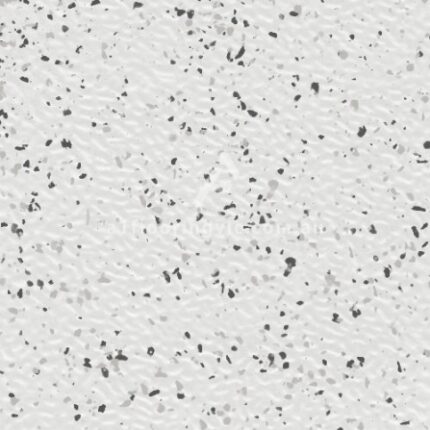
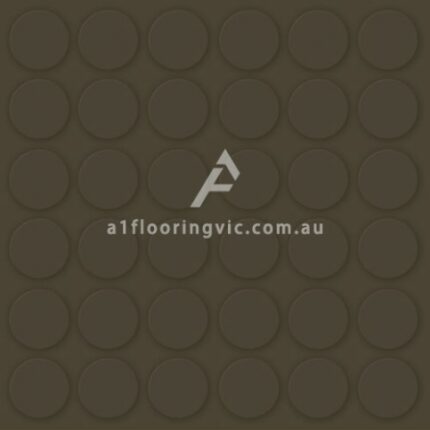
Creation – K2 48
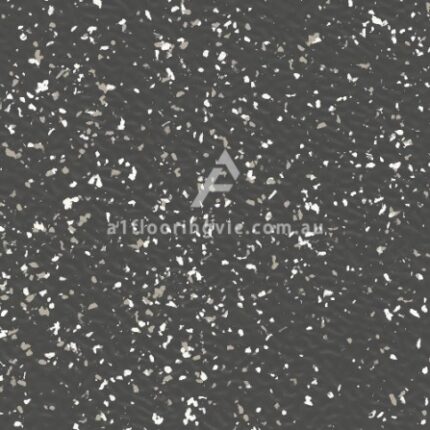
Discovery – H1 42
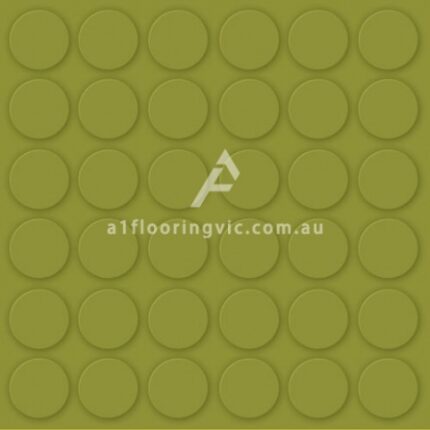
Discovery – K2 42

Dynamite – K2 26
Eros – H1 91
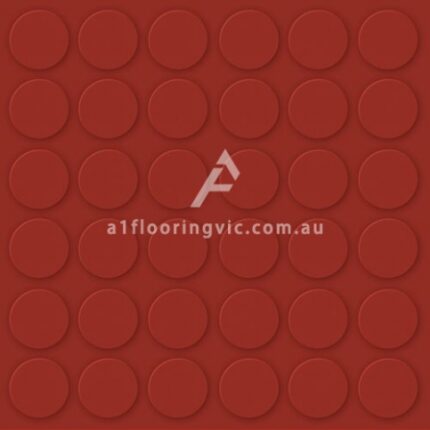
Eros – K2 91
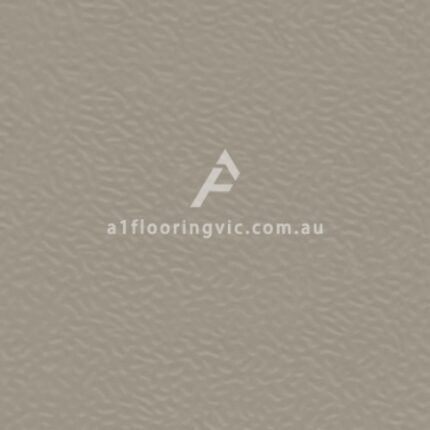
Force – H1 14
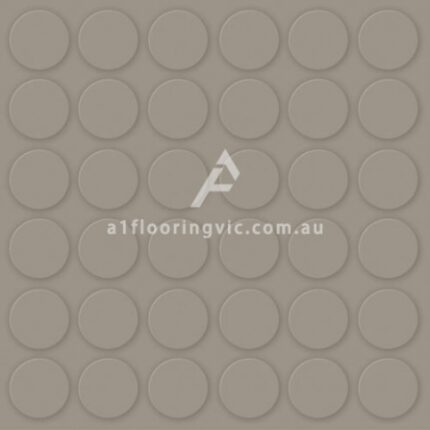
Force – K2 14
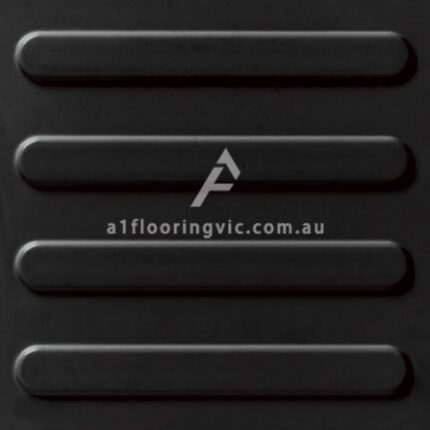
Indoor Directional Black – TACBLA D
Tactiles are rubber flooring tiles specifically crafted as either indoor or outdoor ground surface flooring hazard indicators for the visually impaired. They are designed to warn of impending hazards or to provide directional guidance.
Areas of Use Tactiles are suitable for areas subject to heavy pedestrian traffic. For a building required to be accessible to the public, Tactile ground surface indicators (Type B) must be provided. This is to warn people with vision impairment that they are approaching a stairway, escalator, travelator or a ramp other than a step or kerb ramp. Where an area adjacent to a circulation space is less than 2 metres above floor level, and where no barrier has been provided, Type B indicators must be provided as an appropriate warning. For external use they are required where a pedestrian walkway meets a traffic lane adjacent to a public entry to a building, if there is no kerb ramp at that point.
Types Kinetics Tactiles fully comply with the Australian Standard 1428.4 1992 Part 4. In accordance with this standard they are available in two types: Type B – Hazard indicator: featuring a raised 5mm round stud. Type C – Directional indicator: featuring a raised elongated ridge. Each type is available in two formulations: indoor only and indoor/outdoor (black and yellow only). Colours In accordance with AS1428.4 1992 Part 4 it is necessary to provide a 30% luminant contrast to the surrounding surface. To allow for this contrast and to provide for design flexibility Kinetics Tactiles are available in the featured colours. Product codes are also indicated. Custom colours are available for quantities in excess of 90M2 (1000 tiles).
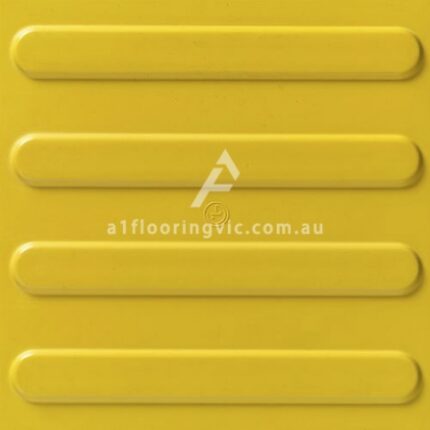
Indoor Directional Yellow – TACYEL L
Tactiles are rubber flooring tiles specifically crafted as either indoor or outdoor ground surface flooring hazard indicators for the visually impaired. They are designed to warn of impending hazards or to provide directional guidance.
Areas of Use Tactiles are suitable for areas subject to heavy pedestrian traffic. For a building required to be accessible to the public, Tactile ground surface indicators (Type B) must be provided. This is to warn people with vision impairment that they are approaching a stairway, escalator, travelator or a ramp other than a step or kerb ramp. Where an area adjacent to a circulation space is less than 2 metres above floor level, and where no barrier has been provided, Type B indicators must be provided as an appropriate warning. For external use they are required where a pedestrian walkway meets a traffic lane adjacent to a public entry to a building, if there is no kerb ramp at that point.
Types Kinetics Tactiles fully comply with the Australian Standard 1428.4 1992 Part 4. In accordance with this standard they are available in two types: Type B – Hazard indicator: featuring a raised 5mm round stud. Type C – Directional indicator: featuring a raised elongated ridge. Each type is available in two formulations: indoor only and indoor/outdoor (black and yellow only). Colours In accordance with AS1428.4 1992 Part 4 it is necessary to provide a 30% luminant contrast to the surrounding surface. To allow for this contrast and to provide for design flexibility Kinetics Tactiles are available in the featured colours. Product codes are also indicated. Custom colours are available for quantities in excess of 90M2 (1000 tiles).

Indoor Hazard Black – TACBLA W
Tactiles are rubber flooring tiles specifically crafted as either indoor or outdoor ground surface flooring hazard indicators for the visually impaired. They are designed to warn of impending hazards or to provide directional guidance.
Areas of Use Tactiles are suitable for areas subject to heavy pedestrian traffic. For a building required to be accessible to the public, Tactile ground surface indicators (Type B) must be provided. This is to warn people with vision impairment that they are approaching a stairway, escalator, travelator or a ramp other than a step or kerb ramp. Where an area adjacent to a circulation space is less than 2 metres above floor level, and where no barrier has been provided, Type B indicators must be provided as an appropriate warning. For external use they are required where a pedestrian walkway meets a traffic lane adjacent to a public entry to a building, if there is no kerb ramp at that point.
Types Kinetics Tactiles fully comply with the Australian Standard 1428.4 1992 Part 4. In accordance with this standard they are available in two types: Type B – Hazard indicator: featuring a raised 5mm round stud. Type C – Directional indicator: featuring a raised elongated ridge. Each type is available in two formulations: indoor only and indoor/outdoor (black and yellow only). Colours In accordance with AS1428.4 1992 Part 4 it is necessary to provide a 30% luminant contrast to the surrounding surface. To allow for this contrast and to provide for design flexibility Kinetics Tactiles are available in the featured colours. Product codes are also indicated. Custom colours are available for quantities in excess of 90M2 (1000 tiles).
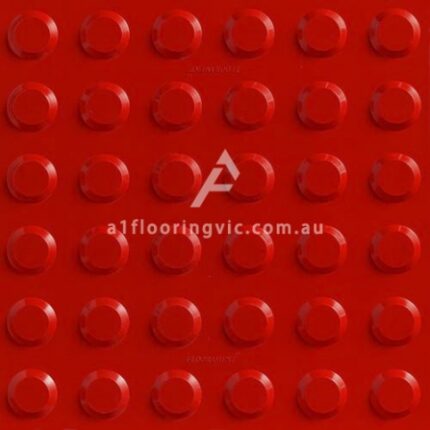
Indoor Hazard Bright Red – TACRED W
Tactiles are rubber flooring tiles specifically crafted as either indoor or outdoor ground surface flooring hazard indicators for the visually impaired. They are designed to warn of impending hazards or to provide directional guidance.
Areas of Use Tactiles are suitable for areas subject to heavy pedestrian traffic. For a building required to be accessible to the public, Tactile ground surface indicators (Type B) must be provided. This is to warn people with vision impairment that they are approaching a stairway, escalator, travelator or a ramp other than a step or kerb ramp. Where an area adjacent to a circulation space is less than 2 metres above floor level, and where no barrier has been provided, Type B indicators must be provided as an appropriate warning. For external use they are required where a pedestrian walkway meets a traffic lane adjacent to a public entry to a building, if there is no kerb ramp at that point.
Types Kinetics Tactiles fully comply with the Australian Standard 1428.4 1992 Part 4. In accordance with this standard they are available in two types: Type B – Hazard indicator: featuring a raised 5mm round stud. Type C – Directional indicator: featuring a raised elongated ridge. Each type is available in two formulations: indoor only and indoor/outdoor (black and yellow only). Colours In accordance with AS1428.4 1992 Part 4 it is necessary to provide a 30% luminant contrast to the surrounding surface. To allow for this contrast and to provide for design flexibility Kinetics Tactiles are available in the featured colours. Product codes are also indicated. Custom colours are available for quantities in excess of 90M2 (1000 tiles).
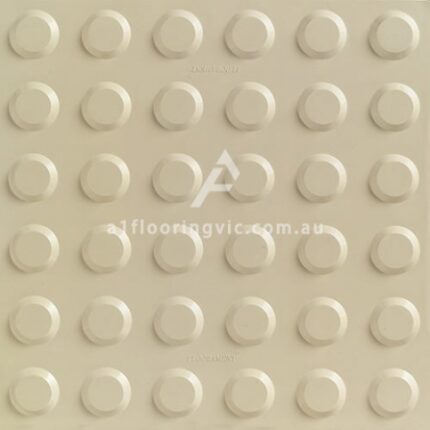
Indoor Hazard Camel – TACCAM W
Tactiles are rubber flooring tiles specifically crafted as either indoor or outdoor ground surface flooring hazard indicators for the visually impaired. They are designed to warn of impending hazards or to provide directional guidance.
Areas of Use Tactiles are suitable for areas subject to heavy pedestrian traffic. For a building required to be accessible to the public, Tactile ground surface indicators (Type B) must be provided. This is to warn people with vision impairment that they are approaching a stairway, escalator, travelator or a ramp other than a step or kerb ramp. Where an area adjacent to a circulation space is less than 2 metres above floor level, and where no barrier has been provided, Type B indicators must be provided as an appropriate warning. For external use they are required where a pedestrian walkway meets a traffic lane adjacent to a public entry to a building, if there is no kerb ramp at that point.
Types Kinetics Tactiles fully comply with the Australian Standard 1428.4 1992 Part 4. In accordance with this standard they are available in two types: Type B – Hazard indicator: featuring a raised 5mm round stud. Type C – Directional indicator: featuring a raised elongated ridge. Each type is available in two formulations: indoor only and indoor/outdoor (black and yellow only). Colours In accordance with AS1428.4 1992 Part 4 it is necessary to provide a 30% luminant contrast to the surrounding surface. To allow for this contrast and to provide for design flexibility Kinetics Tactiles are available in the featured colours. Product codes are also indicated. Custom colours are available for quantities in excess of 90M2 (1000 tiles).
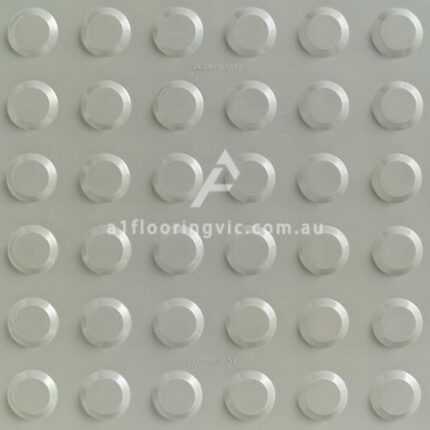
Indoor Hazard Pewter – TACPEW W
Tactiles are rubber flooring tiles specifically crafted as either indoor or outdoor ground surface flooring hazard indicators for the visually impaired. They are designed to warn of impending hazards or to provide directional guidance.
Areas of Use Tactiles are suitable for areas subject to heavy pedestrian traffic. For a building required to be accessible to the public, Tactile ground surface indicators (Type B) must be provided. This is to warn people with vision impairment that they are approaching a stairway, escalator, travelator or a ramp other than a step or kerb ramp. Where an area adjacent to a circulation space is less than 2 metres above floor level, and where no barrier has been provided, Type B indicators must be provided as an appropriate warning. For external use they are required where a pedestrian walkway meets a traffic lane adjacent to a public entry to a building, if there is no kerb ramp at that point.
Types Kinetics Tactiles fully comply with the Australian Standard 1428.4 1992 Part 4. In accordance with this standard they are available in two types: Type B – Hazard indicator: featuring a raised 5mm round stud. Type C – Directional indicator: featuring a raised elongated ridge. Each type is available in two formulations: indoor only and indoor/outdoor (black and yellow only). Colours In accordance with AS1428.4 1992 Part 4 it is necessary to provide a 30% luminant contrast to the surrounding surface. To allow for this contrast and to provide for design flexibility Kinetics Tactiles are available in the featured colours. Product codes are also indicated. Custom colours are available for quantities in excess of 90M2 (1000 tiles).