


Blog
Everything You Need To Know About Vinyl Flooring

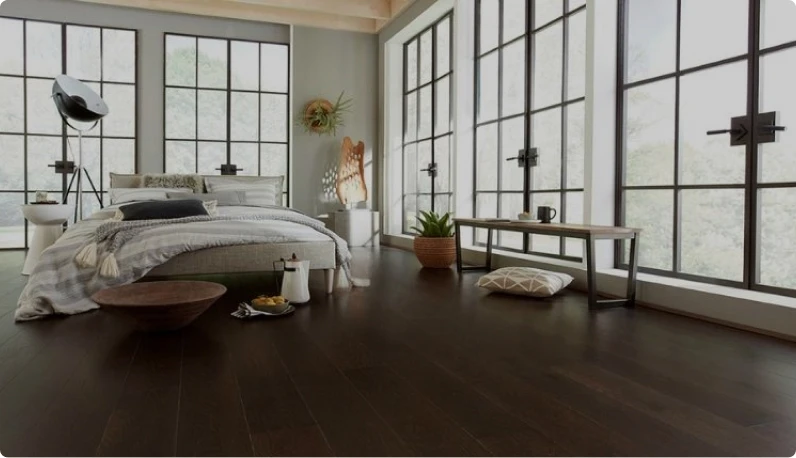
Does Vinyl Flooring Look Good?
Who isn’t charmed by the rich warmth of a polished hardwood floor? You can achieve the look of real timber with flooring that is ideal for low maintenance living. Vinyl flooring is hardwearing, able to withstand the daily difficulties of family living, and easy to clear. A fantastic option for households with young families.
Vinyl flooring brings affordable yet stylish design to any room, it’s easy to maintain and comfortable underfoot. Suitable for homes, offices and even commercial spaces, vinyl lets you create a completely unique environment. Vinyl flooring is made from polyvinyl chloride (PVC), with various compounds added to customise the material’s characteristics such as colour, flexibility, hardness and shine. Thanks to this you can select from a range of attractive patterns and effects.
How Does Vinyl Flooring Wear?
Vinyl floors are resilient, durable, and have a range of beautiful modern finishes. This has made vinyl flooring material a popular choice amongst homeowners who are looking to redo the flooring in their home. While the average life expectancy of vinyl floors is 10 to 20 years, they can last longer if the proper precautions are taken. Prior knowledge of the different types of vinyl flooring material and cleaning products. the wear layer is a crucial component, ensuring the durability and appearance of the floor. Developing tougher and harder coatings is a priority. There are three types of finishes.
1 · For light traffic areas, with minimal exposure to dirt, ‘No wax’ vinyl flooring are the best option.
2 · For normal to heavy traffic areas, a Urethane layer protection will resist most scratches, scuff marks, as well as clean easily.
3 · For heavy traffic areas, an enhanced urethane layer provides the most scratch and stain resistance and helps the floor keep its shine and lustre despite heavy traffic.
Which Vinyl Flooring Is Best?
1. Vinyl Sheet
Vinyl Tile are made of vinyl resting on a fibreglass backing sheet and coated with some protected layers of polyurethane to make it even more resilient. Vinyl sheet flooring is fairly robust and can sustain a high amount of traffic. It is usually about 2.5 -3mm thick but can feel softer and warmer underfoot than wood or stone. They are also completely waterproof and can be used in bathrooms and kitchens. Vinyl Tile are usually the most affordable solution as they can be mass-produced into huge rolls without having to be cut into smaller pieces.
2. Vinyl Plank
Vinyl Plank are made from vinyl and attached to an underlayer of fibreglass which makes it very rigid unlike a vinyl sheet, which needs to be rolled out making any rigidity impossible. Vinyl planks come in different thicknesses including 2mm or 3mm. While the thicker planks may cost more, you could save you money in the long run as they are hard-wearing and are better suited for high traffic areas.
3. LVT
Luxury vinyl plank flooring commonly referred to as LVT (luxury vinyl tile) and LVP (luxury vinyl plank). Luxury vinyl is made up of multiple layers pressed together to create a very hard-wearing and natural-looking finish. Most luxury vinyl tiles or planks are completely waterproof floor that are easy to install and maintain. Luxury vinyl planks usually come in different thicknesses including 4.5mm and 5mm. Luxury vinyl flooring is a pricier option but also the most resilient which may work out cheaper in the long run.
4. WPC Vinyl
Wood-plastic composite flooring has a composite backing instead of a solid PVC backing. WPC vinyl combines recycled wood pulp and plastic composites to form a strong and stable bond, which is then topped with a standard vinyl top layer. WPC is 100% waterproof, so its great for kitchens or bathrooms. Its engineered luxury vinyl planks and tiles are DIY-friendly, featuring an effortless interlocking system that can be installed – without any glue – over most existing subfloors. Typically, all WPC products will be considered luxury vinyl planks or tiles, however not all luxury vinyl is WPC.
5. SPC Vinyl
Stone plastic composite flooring is very similar to WPC vinyl, an SPC vinyl combines limestone and stabilizers to create an extremely durable core. SPC vinyl is still 100% waterproof but provides greater stability, dent resistance and structure to vinyl plank flooring. With the stone construction, an SPC core is more suited for temperature changes, such as cabins, homes with AC units and homes with humidity fluctuations.
6. Hybrid Vinyl
Hybrid is the latest flooring innovation that’s water, scratch and stain-resistant. As you may have guessed, the hybrid is a type of vinyl that is mixed with another material. Hybrid vinyl floors combine the best attributes of both vinyl and laminate, to give you the ultimate flooring solution for any project.
How Much Do Vinyl Floors Cost?
Fortunately, vinyl flooring gives the look of stunning hardwood flooring without the exorbitant cost. It requires little maintenance, and it can last up to 20 years – or longer if the proper precautions are taken – without needing replacement. It’s very durable, it can handle heavy traffic, resists water and stains. This option for flooring provides great value for your money. For supply and installation, you should expect to pay around: $26 to $35 per square metre for budget vinyl flooring, and anywhere up to $90 per square metre for vinyl plank flooring. Prices may vary depending on the quality of the product and the state you live in.
The Risks And Disadvantages Of Vinyl Flooring?
Most homeowners who love the look of hardwood floors and are tempted to vinyl flooring the low-priced alternative that closely resembles hardwood floors. However, homeowners need to understand the downfalls and disadvantages of vinyl flooring.
1. Cannot be repaired
Vinyl plank flooring is very durable; that being said, it is a softer material than most laminates, hardwoods and tiles. Vinyl flooring can be punctured easily with sharp objects, such as dropping a kitchen knife or sliding a metal leg chair. Along with punctures, vinyl without a rigid core can show signs of denting if there are heavy objects placed atop of it. This may damage the look of your home, as vinyl floors can be repaired properly.
2. Difficult to remove
If you choose to glue down your vinyl plank flooring to the subfloor, the removal process is known to be very difficult. So, if you are installing vinyl as a temporary solution, it is recommended that you use interlocking floorboards and avoid glue to make the removal as easy as possible. However, in a large open space, glued down vinyl flooring will be the best for your project.
3. Not eco-friendly; difficult to recycle
For environmentally-conscious consumers, vinyl plank flooring is not biodegradable since it is made largely from PVC resin, which can be very difficult to recycle. Now some programs will recycle your vinyl flooring, but they are not easy to find. There are also concerns about emissions of volatile organic compounds (VOCs) from PVC products including vinyl flooring. However, Instead of continually cutting down forests of rare and exotic trees, vinyl flooring requires only a photograph of a part of a tree.