


Blog
Hybrid Flooring Pros and Cons in Australia (2026 Expert Guide)

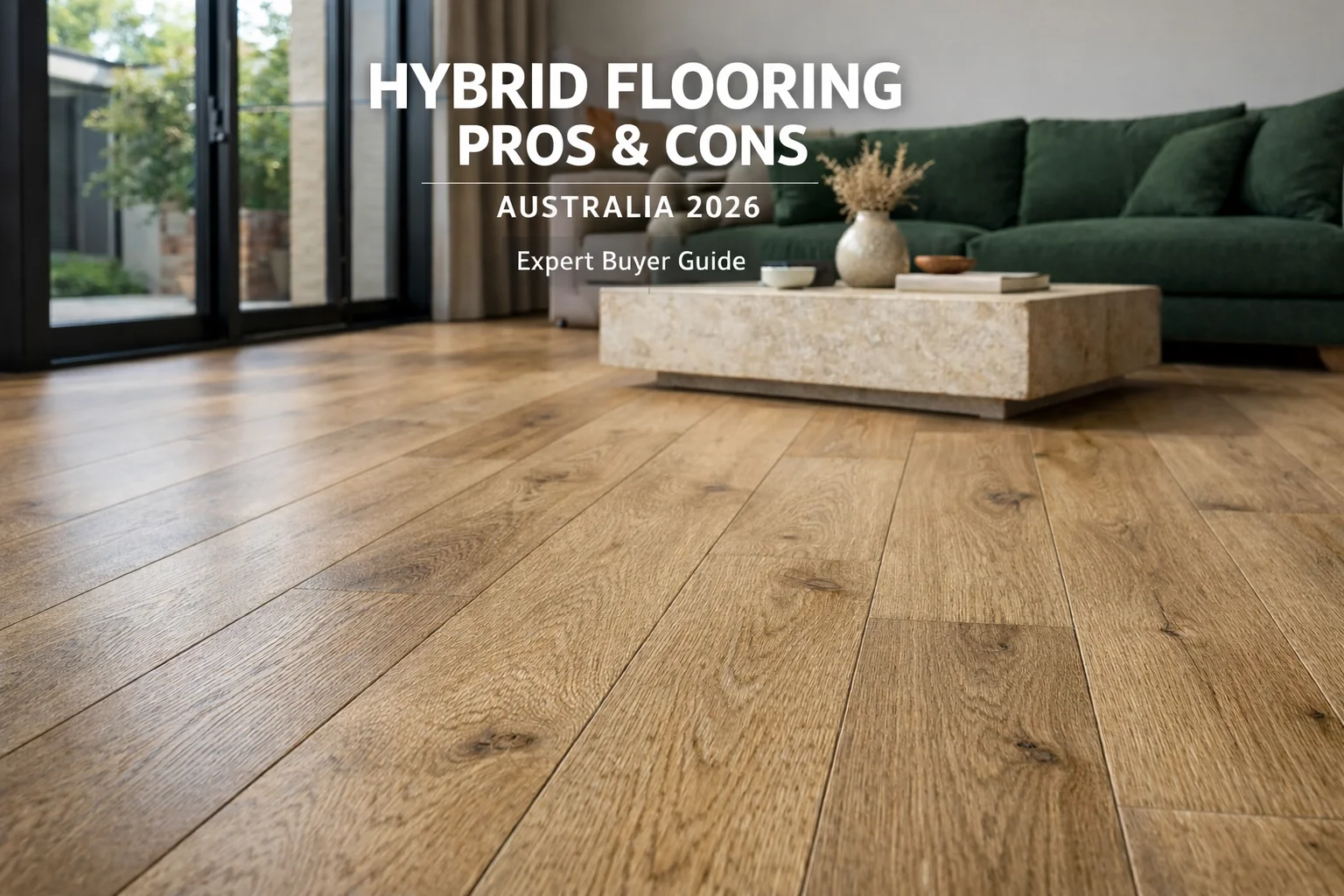
Hybrid Flooring Pros and Cons
Understanding hybrid flooring pros and cons is essential before investing in new flooring in 2026. Across Australia, hybrid flooring has become one of the fastest-growing categories due to its waterproof core, dimensional stability, and competitive pricing. However, many homeowners still ask: Is hybrid flooring good long term? Are there hidden hybrid flooring disadvantages? How does it compare to laminate or vinyl?
This expert-level guide provides a balanced, technically accurate, and Australian-specific analysis designed for decision-stage buyers. We examine construction, performance, risks, costs, and suitability to help you make a confident flooring choice.
What Is Hybrid Flooring?
Hybrid flooring combines rigid core technology with a decorative timber-look surface and a click-lock floating installation system. It merges the waterproof qualities of vinyl with the structural stability of laminate.
SPC vs WPC Core Construction
| Core Type | Composition | Structural Behavior | Common Use in Australia 2026 |
|---|---|---|---|
| SPC (Stone Plastic Composite) | Limestone + PVC stabilisers | Very rigid, minimal expansion | Most common in modern Australian homes |
| WPC (Wood Plastic Composite) | PVC with foaming agents | Slightly softer, thicker feel | Mid-tier residential applications |
In 2026, SPC hybrid dominates the Australian market because it performs well over concrete slabs and in changing climates.
Typical Layer Structure
- UV protective coating
- Transparent wear layer (0.3mm–0.7mm)
- Decorative timber-look print
- Rigid waterproof SPC core
- Attached acoustic underlay
Most products range between 5mm–8mm thick and install using a floating click system with expansion gaps.

Hybrid Flooring Benefits – Detailed Performance Analysis
1. Waterproof Performance
SPC hybrid flooring is fully waterproof at the core level. Unlike laminate, it does not swell when exposed to surface water. Therefore, it performs reliably in kitchens, laundries, and apartment living environments.
2. Dimensional Stability
Because of its stone composite core, hybrid flooring expands less than laminate. Consequently, it reduces risks of peaking, joint separation, and seasonal movement.
3. Durability & Scratch Resistance
With a 0.5mm wear layer, hybrid flooring withstands pets, furniture movement, and everyday residential traffic. However, heavy commercial wear may require higher-grade specifications.
4. Installation Efficiency
Hybrid installs quickly over concrete slabs and existing tiles (if level). As a result, installation costs remain lower than engineered timber.
5. Cost Advantage
Compared with engineered timber, hybrid flooring typically costs 40–60% less installed while maintaining a timber-look aesthetic.
Hybrid Flooring Disadvantages – Honest Technical Review
1. Harder Underfoot
SPC cores are dense. Therefore, hybrid flooring can feel firmer than engineered timber or WPC alternatives.
2. No Refinishing Capability
Unlike real timber, hybrid flooring cannot be sanded. If damaged, individual boards must be replaced.
3. Surface Wear Limits
Low-cost imports may have thinner wear layers. Consequently, selecting a reputable supplier is critical.
4. Potential UV Fading
Extended exposure to strong Australian sunlight may cause fading in lower-grade products. Premium UV coatings reduce this risk.
5. Expansion Gaps Required
Despite improved stability, expansion gaps (10–12mm) remain mandatory to prevent lifting or buckling.
Hybrid Flooring Pros and Cons – Structured Impact Table
| Feature | Advantage Level | Limitation Level | Best For | Risk Consideration |
|---|---|---|---|---|
| Waterproof Core | High | Low | Kitchens, apartments | Edge sealing required |
| Dimensional Stability | High | Low | Concrete slab homes | Large areas need planning |
| Scratch Resistance | Moderate–High | Moderate | Families, pets | Wear layer thickness matters |
| Comfort | Moderate | Moderate | Rental properties | Harder feel than timber |
| Refinishing | Low | High | Mid-term ownership | No sanding option |
Hybrid vs Laminate vs Vinyl – 2026 Comparison
| Feature | Hybrid | Laminate | Vinyl |
|---|---|---|---|
| Waterproof | Yes | No | Yes |
| Core | SPC Rigid | HDF Fibreboard | Flexible PVC |
| Stability | High | Moderate | Moderate |
| Price Range | Mid | Lower | Low–Mid |
Hybrid Flooring Cost in Australia 2026
Estimated 2026 Pricing – Australia (AUD)
| Cost Component | Price Range (per m²) |
|---|---|
| Supply Only | $35 – $75 |
| Installation | $25 – $45 |
| Total Installed | $60 – $120 |
Expert Recommendation – Hybrid Flooring Pros and Cons Final Assessment
After evaluating the full spectrum of hybrid flooring pros and cons, hybrid flooring remains one of the most balanced flooring options in Australia in 2026. It offers waterproof reliability, structural stability, and competitive pricing. Nevertheless, it is not a luxury timber substitute, nor is it immune to improper installation.
If you are considering hybrid flooring for your home, we recommend reviewing available collections and speaking with a flooring specialist:
- Explore available ranges: Hybrid Flooring Collection
- Learn more about our experience: About Our Flooring Expertise
- For Australian building compliance guidance, refer to the Australian Building Codes Board (ABCB)
A professional consultation ensures correct product selection, subfloor preparation, and long-term performance confidence.

Frequently Asked Questions
Is hybrid flooring really waterproof?
Yes. SPC hybrid flooring features a waterproof core that resists swelling from surface moisture.
What are the disadvantages of hybrid flooring?
Hybrid flooring disadvantages include a harder feel underfoot, no refinishing capability, and possible fading in extreme sunlight.
Is hybrid better than laminate?
In moisture-prone areas, hybrid performs better due to its waterproof core.
How long does hybrid flooring last?
Quality hybrid flooring typically lasts 15–25 years in residential settings.
Is hybrid flooring good for kitchens?
Yes, provided it is installed correctly with proper expansion gaps.