


Blog
Hybrid Flooring Thickness Explained: The Ultimate 5mm vs 6.5mm vs 8mm Guide for Australia (2026)

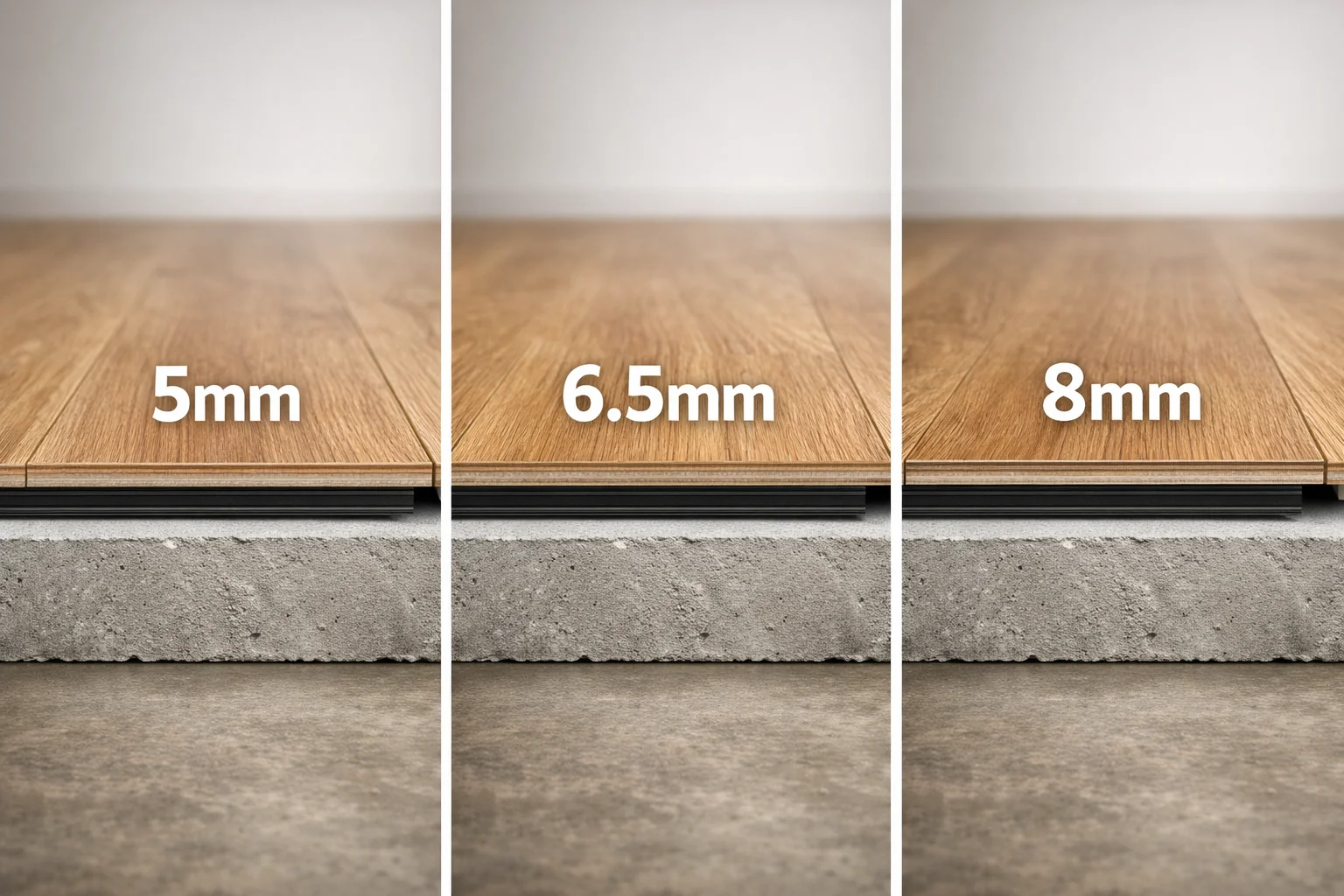
Hybrid Flooring Thickness Explained: 5mm vs 6.5mm vs 8mm
Hybrid flooring thickness explained is one of the most critical decisions Australian homeowners face in 2026. While colour, texture, and timber visuals influence appearance, thickness directly impacts durability, acoustic comfort, structural stability, and long-term performance.
In Australia, where concrete slabs dominate residential construction, choosing the wrong hybrid flooring thickness can result in excessive noise, hollow sounds, plank movement, or premature failure. Therefore, understanding the difference between 5mm vs 6.5mm vs 8mm hybrid flooring is essential before making a final decision.
This expert guide explains hybrid flooring thickness in clear, practical terms, helping you select the best option for houses, apartments, and investment properties in 2026.
What Does Hybrid Flooring Thickness Mean?
Hybrid flooring thickness refers to the total height of each plank, measured in millimetres. It includes multiple engineered layers that work together to deliver strength and comfort.
- Wear layer (surface protection)
- Decorative timber-look layer
- Rigid core (usually SPC)
- Attached acoustic underlay (if included)
Importantly, thickness does not only affect strength. Instead, it plays a major role in noise reduction, underfoot comfort, subfloor tolerance, and installation reliability.
Why Hybrid Flooring Thickness Matters in Australia (2026)
Hybrid flooring must perform under Australian conditions, which present unique challenges. Because of this, thickness selection becomes even more important.
- Concrete slabs amplify sound and vibration
- Open-plan living increases foot traffic
- Strata buildings enforce acoustic standards
- Temperature changes cause expansion and contraction
As a result, selecting the correct hybrid flooring thickness is not a cosmetic choice. Instead, it is a long-term performance decision.
Hybrid Flooring Thickness Overview: 5mm vs 6.5mm vs 8mm
| Thickness | Best Use | Acoustic Comfort | Durability | Typical Price |
|---|---|---|---|---|
| 5mm | Low-traffic & rentals | Low to moderate | Basic | $ |
| 6.5mm | Homes & apartments | Good | High | $$ |
| 8mm | Luxury & strata | Excellent | Premium | $$$ |
5mm Hybrid Flooring Explained
5mm hybrid flooring is the thinnest commonly available option in Australia. It typically features a rigid SPC core combined with a basic wear layer and minimal underlay.
Advantages of 5mm Hybrid Flooring
- Lower upfront cost
- Lightweight and easy to install
- Minimal impact on door heights
Limitations of 5mm Hybrid Flooring
- More hollow sound on concrete slabs
- Lower acoustic performance
- Less forgiving over uneven subfloors
- Reduced lifespan in busy areas
Therefore, 5mm hybrid flooring is best suited for rentals, spare rooms, or low-traffic spaces.
6.5mm Hybrid Flooring Explained (Australia’s Most Popular Choice)
In 2026, 6.5mm hybrid flooring has become the most widely used thickness across Australia. It provides a balanced combination of strength, comfort, and value.
Why 6.5mm Hybrid Flooring Performs Better
- Thicker core improves structural stability
- Enhanced locking systems reduce movement
- Improved acoustic underlay absorption
- More comfortable underfoot feel
Because of these benefits, 6.5mm hybrid flooring performs exceptionally well in family homes, apartments, and open-plan living areas.
8mm Hybrid Flooring Explained (Premium Performance)
8mm hybrid flooring represents the premium tier of hybrid products. It delivers superior sound control, comfort, and long-term durability.
Key Benefits of 8mm Hybrid Flooring
- Excellent impact noise reduction
- Maximum walking comfort
- High resistance to flex and deflection
- Ideal for uneven concrete slabs
Although more expensive, 8mm hybrid flooring is often required in strata-approved apartments and luxury homes.
Acoustic Performance: How Thickness Reduces Noise
| Thickness | Typical Acoustic Result |
|---|---|
| 5mm | Minimum compliance only |
| 6.5mm | Meets most strata standards |
| 8mm | Exceeds acoustic requirements |
Hybrid Flooring Thickness vs Wear Layer
Thickness improves comfort and sound control. However, the wear layer determines surface durability.
| Area | Recommended Wear Layer |
|---|---|
| Bedrooms | 0.3mm |
| Living areas | 0.5mm |
| Commercial | 0.7mm+ |
Hybrid Flooring Thickness for Concrete Slabs
Because concrete slabs amplify sound and highlight imperfections, thicker hybrid flooring performs better. For this reason, 6.5mm and 8mm hybrid flooring are strongly recommended for slab construction.
Recommended Hybrid Flooring Thickness by Property Type
| Property Type | Recommended Thickness |
|---|---|
| Rental property | 5mm – 6.5mm |
| Apartment | 6.5mm – 8mm |
| Family home | 6.5mm |
| Luxury home | 8mm |
Where to Buy Hybrid Flooring in Australia
Hybrid Flooring Collection:
A1 Hybrid Flooring Range
Australian Timber & Flooring Supplier:
AST Timbers
Final Verdict: Hybrid Flooring Thickness Explained (2026)
In conclusion, hybrid flooring thickness explained comes down to performance, comfort, and long-term value.
- 5mm suits short-term or low-traffic use
- 6.5mm delivers the best overall value for Australian homes
- 8mm offers premium acoustic and comfort performance
For most Australians in 2026, 6.5mm hybrid flooring remains the smartest and safest choice.
Frequently Asked Questions
What is the best hybrid flooring thickness in Australia?
For most homes, 6.5mm hybrid flooring provides the best balance of durability, acoustics, and cost.
Is thicker hybrid flooring better?
Thicker flooring improves comfort and sound reduction, but wear layer quality is equally important.
Can I use 5mm hybrid flooring in apartments?
Generally no. Many strata buildings require higher acoustic performance than 5mm can deliver.
Does hybrid flooring thickness affect lifespan?
Thickness improves stability, while wear layer thickness determines surface longevity.
Is 8mm hybrid flooring worth the cost?
Yes, especially for luxury homes, apartments, and noise-sensitive environments.
Hybrid Flooring Thickness Explained